Benefits of participating in the airline course
The Airway Management course has several benefits that help improve the quality of medical care and increase patient safety. Some of these benefits are mentioned below:
- Increasing clinical skills
- Improve treatment outcomes
- Increase self-confidence
- Improving patient safety
- Prepare for emergencies
Airway course training details
This course includes:
- The theory part is on PowerPoint with recorded audio, which will teach you just like in the classroom.
- The second part of the clinical training course is on mollage.
- The third part includes clips for intubation (tracheal tube) and LMA laryngeal masks on humans.
The practical course includes 260 minutes of educational video in the Spot Player program without an expiration date. This means that you can access the content of the course whenever you want and strengthen your skills. It took six months to prepare this course.
Be an emergency hero
By attending these courses, you will not only gain the necessary skills, but also gain the confidence to implement the techniques in real-world situations.

What will you learn in the airline course?
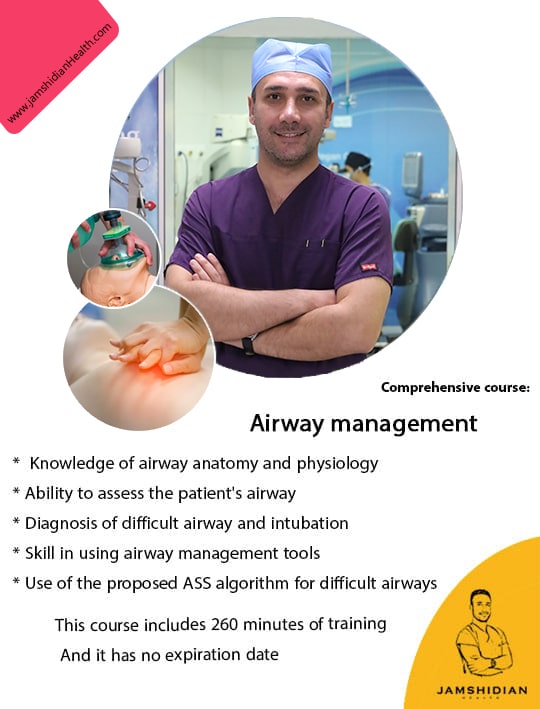
- Getting to know the anatomy and physiology of the airway: in this section, you will get to know the detailed understanding of the anatomy and physiology of the airways for correct diagnosis and effective management of critical situations. This section teaches the structure and function of the nose, mouth, larynx, trachea and bronchi.
- Ability to accurately assess the patient’s airway: This section deals with learning assessment techniques to identify potential problems.
- Airway opening techniques: These methods include simple maneuvers such as the chin-forehead maneuver, pulling the jaw forward, as well as more advanced techniques such as intubation and the use of LMA laryngeal masks.
- Diagnosis and management of difficult airway and intubation: Airway obstruction can be caused by various factors such as foreign body, bleeding, tissue swelling or tongue prolapse. Tutorials in this section include unblocking techniques and the use of assistive tools.
- Familiarity with the use of medical tools and equipment: This equipment includes laryngoscope, video laryngoscope, bogies and mechanical ventilation devices. Teaching how to use this equipment correctly and safely is one of the main goals of the course.
- Applying the ASS Suggested Algorithm to Difficult Airway: This section deals with learning standard methods for managing complex conditions.
What is the equipment needed for respiratory intubation?
- endotracheal tube (ETT)
- Laryngoscope
- Video laryngoscope
- HEPA/HME filter
- Ambobag
- Pence Magill
- air syringe
- Pipe fixing tools (bind or glue)
- suction
Essential Airway Management Skills
The human respiratory system is divided into two main parts, which include the upper and lower respiratory system. This division helps us to better understand the function and structure of this vital system.
This information helps us understand the importance of proper airway management and, when necessary, take the necessary steps to keep it open. By better understanding this system and how to manage it, we can help improve the health and safety of patients.
Professional airway management in critical situations
We will need airway protection in the following situations.
- Unconsciousness GCS less than 9 or severe head injury
- Severe trauma to the jaw and face or the need to be in a position other than supine during surgery
- Risk of aspiration: bleeding in the pharynx and vomiting
- Obstruction risk: progressive hematoma in the neck, larynx-tracheal damage such as burns, anaphylaxis, stridor caused by spasms of various asthma or allergy triggers.
From basic to advanced in airway management
Airway management from laryngoscope to tracheostomy is divided into two general parts:
Basic airway management (without equipment): These methods include techniques that help keep the airway open without the need for special equipment. These techniques are usually used in emergency situations when equipment is not available.
2. Advanced airway management: These methods include the use of special equipment and devices that help keep the airway open and better managed. These equipments are usually used in hospital environments and by trained personnel.
Airway management basic course
There are different methods to open the airway on a basic basis, including the following:
- Maneuver head back chin up (Heat tilt – chin lift)
- Jaw thrust maneuver in suspected neck trauma patients
- Triple maneuver: It is a combination of head extension, opening the mouth and pulling the chin up.
- Jaw-tongue lift maneuver
- Maneuvers to open the airway when the airway is obstructed by a foreign body
- Back blow maneuver to be done while exhaling.
- Heimlich maneuver
- The finger sweeping maneuver is performed for visible foreign bodies.
- Laryngoscopy and direct suction of foreign body
- Use of Magill’s forceps
- Using a bronchoscopy to remove an object that goes below the mouth (trachea).
Advanced Airway Management Course
There are different ways to open an advanced airway, including the following:
- Endotracheal intubation: the primary method of maintaining and managing the airway
- Oral intubation: direct, fiberoptic, retrograde laryngoscopy
- Nasal intubation: blind, fiberoptic or using video laryngoscope and Magill forceps
- Cricothyrotomy
- Tracheostomy
Join us and be part of a community committed to improving people’s health and safety. Where education and experience come together to make you a true professional.
The secret to success in emergency is mastering airway management
How to register and the cost of the Airway Management course
- Registration steps: through purchase from the site
- Payment method: Zarin Pal payment portal
Contact and more information for the online course
The online course support contact number is 09157066551
Buy the course online
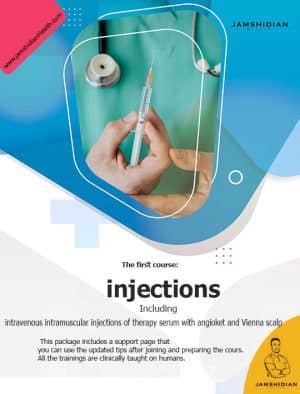
Click the “Add to Cart” button to buy the injection course online.
Jamshidian Health Academy, organizer of airway management course
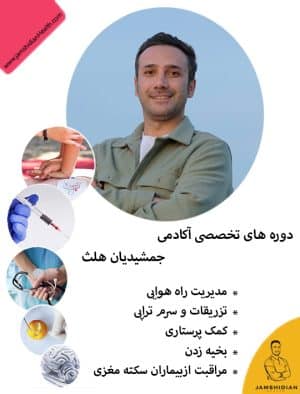
Jamshidian Health Academy conducts face-to-face and online medical and nursing training courses for the general public. Trainings are divided into two virtual and face-to-face parts:
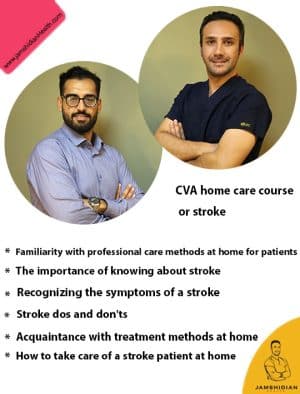
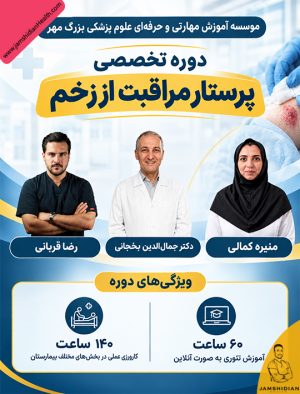
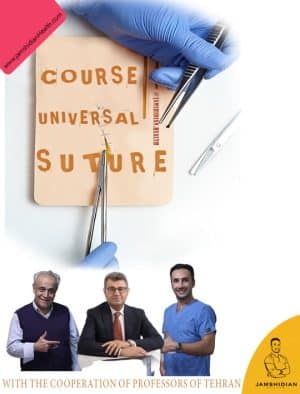
- Virtual and online training includes courses on injections, nursing assistance, sutures, airway management, business management, and stroke patient care. These courses are offered in the form of video packages to increase and improve the knowledge and skills of ordinary people and medical staff.
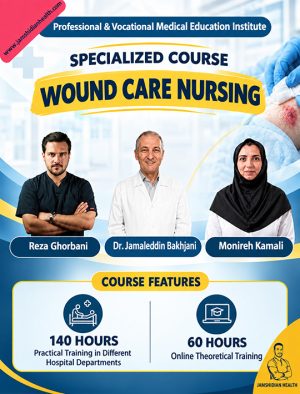
- Face-to-face and skill courses include injection and serum therapy training, wound and ostomy training, and biotherapy course.
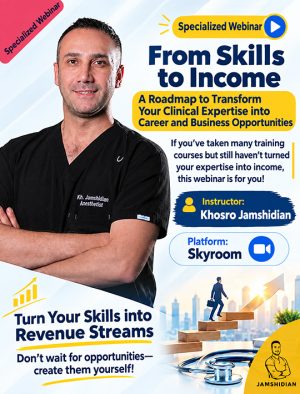
In addition to training, Jamshidian Academy can also help you in the field of establishing a clinic and starting a business in the field of health, so that you can walk on this path with the right insight and confidence.
With the Jamshidian Health team, you will not have any worries.
Comments and suggestions
Dear user, please help us in providing better services by registering your comments and suggestions regarding the holding of courses and the support of the Jamshidian Health team.










نقد و بررسیها
هنوز بررسیای ثبت نشده است.